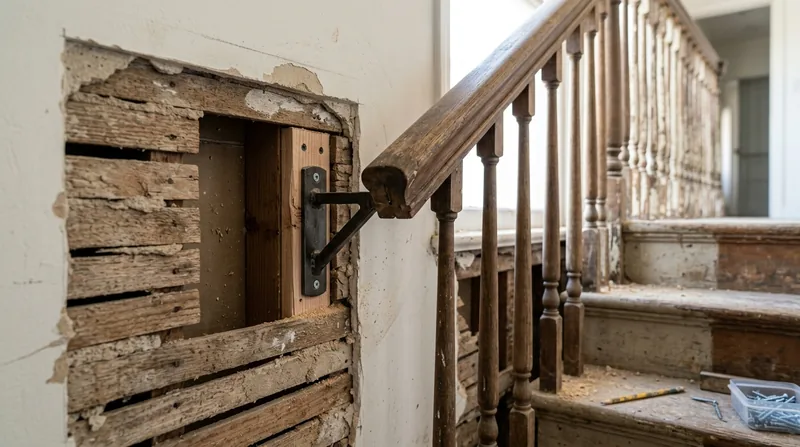




Stair & Railing Repair in Los Angeles keeps the hillside homes and canyon-lot residences of this city safe and functional. From the grand Spanish Colonial Revival mansions of Hancock Park to the Craftsman bungalows scattered across Los Feliz and Highland Park, Los Angeles is built on terrain that demands solid staircases. Squeaky treads, loose balusters, worn stringers, and rotting treads are common in homes where wood framing meets seasonal moisture swings and decades of use. We repair and rebuild the stairs your home climbs every day, restore period railings to their original character, and install code-compliant handrails and safety upgrades. This page explains what we fix, how we work, and what to expect when you call.
Why Stair & Railing Repair Matters in Los Angeles Homes
Los Angeles hillside and canyon neighborhoods demand robust stair construction. Many homes sit on steep lots, and interior staircases climb multiple stories with no room for error. Exterior stairs to decks, patios, and entry porches face direct sun, seasonal moisture, and termite pressure that is among the highest in the country. A loose bannister or sagging tread is not just a nuisance; it is a safety issue and a sign that structural wood has begun to fail. Addressing stairs early stops small problems from becoming expensive replacements.
- We tighten loose balusters, newel posts, and handrails to restore safety and eliminate wobble.
- We repair or replace worn or cracked stringers (the angled support beams that carry the load of each step).
- We rebuild squeaky treads by reinforcing fasteners, adding blocking, or replacing the tread itself.
- We install new handrails and attic ladders to meet current building code requirements.
- We restore historic railings in period homes, matching original profiles and finishes.
Safe, stable stairs are essential in every Los Angeles home, whether you are climbing to a second story or stepping onto a back porch.
Key info: Stair repairs in Los Angeles often involve wood rot or dry rot in stringers and treads, especially in older hillside homes where moisture lingers in shaded stairwells. Termite damage to balusters and newel posts is also common. We assess the extent of the damage and propose repair when the wood is sound, replacement when it is not.
How We Repair and Rebuild Stairs in Los Angeles
Our process starts with a site visit to understand the stair layout, load path, and condition of each component. We inspect treads, risers, stringers, balusters, newel posts, and handrails for movement, rot, termite damage, or structural failure. We then propose a repair plan that addresses the root cause and restores safety without unnecessary replacement. For simple issues like loose fasteners or squeaky treads, repair is fast and affordable. For rot or structural damage, we may need to sister a new joist to an existing stringer, replace individual treads, or rebuild the entire staircase.
- We inspect all stair components for rot, termite damage, movement, and code compliance on the first visit.
- We tighten loose hardware and reinforce fasteners to eliminate wobble and squeaking.
- We repair or replace damaged stringers, treads, and risers using solid wood that matches the original species and finish.
- We install new handrails, balusters, and newel posts to meet current building code and safety standards.
- We finish all repairs to blend with existing stairs and protect new wood from moisture and termite pressure.
The result is a safe, stable staircase that looks original and functions for decades to come.
Local example: A West Hollywood Craftsman bungalow had loose balusters and a sagging stringer on the main interior staircase. We tightened all fasteners, reinforced the stringer with blocking where it had shifted, and replaced two treads that showed early dry rot. The stairs now climb safely and the handrail is solid. Total time, two days. Had we waited, the stringer would have failed completely and required full replacement.
Stair & Railing Repair Methods in Los Angeles
The method we choose depends on the damage, the stair design, and the original wood species. Interior stairs in older homes are often Douglas fir or redwood, while exterior stairs may be pressure-treated lumber or cedar. We assess whether repair is sufficient or whether replacement is the honest answer. Below is a guide to the approaches we use most often in Los Angeles homes.
| Approach | Description | Best for |
|---|---|---|
| Tightening and reinforcing fasteners | We remove loose screws and bolts, add shims or blocking where needed, and reinstall with larger or more fasteners to eliminate movement. | Loose balusters, wobbling handrails, squeaky treads with sound wood underneath. |
| Sistering stringers | We attach a new, solid joist or beam alongside a damaged or sagging stringer to restore load capacity without removing the original. | Stringers with dry rot, termite damage, or deflection that is not yet critical. |
| Replacing individual treads or risers | We remove a damaged tread or riser and install a new one, matching the original species, profile, and finish as closely as possible. | Rot, severe wear, or termite damage localized to one or two steps. |
| Full staircase rebuild | We remove and rebuild the entire staircase, including stringers, treads, risers, balusters, newel posts, and handrails. | Extensive rot, structural failure, or major code updates needed (handrail height, baluster spacing, landing requirements). |
| Installing new handrails and balusters | We add or upgrade handrails and balusters to meet code requirements for height, spacing, and load capacity. | Homes with open railings, missing handrails, or balusters spaced too far apart for safety. |
Each method is tailored to the condition of your stairs and the long-term durability you need. We explain our recommendation and let you decide whether to repair or replace. For more information on structural carpentry and wood damage assessment, see our wood rot and dry rot repair page.
Stair & Railing Repair Cost in Los Angeles: What to Expect
The cost of stair and railing repair in Los Angeles depends on the scope of damage, the number of components that need attention, and whether you are repairing or replacing. A simple tightening of loose fasteners and squeaky treads on a single flight may start at around $600 to $900. A more involved repair, such as sistering a stringer or replacing multiple treads, typically runs $1,500 to $3,000. A full staircase rebuild, including new stringers, treads, risers, balusters, and handrails, can range from $4,000 to $8,000 or more, depending on the number of flights and the complexity of the design.
Several factors move the cost up or down. The condition and extent of rot or termite damage in the stringers is the biggest driver. Interior stairs cost less than exterior stairs because they face less weather and termite pressure. Historic homes with period railings or custom newel posts may require special matching or restoration work. Access and site conditions matter too. A staircase in a tight basement corner costs more to work in than one in an open foyer. The best way to get an accurate number is to have us visit your home, assess the damage, and give you a detailed estimate. We provide free estimates within 24 hours at (213) 652-2684, with no obligation to book.
For a full breakdown of pricing across all our services, visit our pricing page.
Stair & Railing Repair Near Me: What Los Angeles Homeowners Should Know When Hiring
When you are looking for stair and railing repair near Los Angeles, the right contractor makes all the difference. You want someone who understands wood, can diagnose the real cause of the problem, and proposes repair before replacement. Here is what to look for. First, confirm that the contractor is fully insured and bonded. This protects you in case of injury or damage during the work. Ask to see the certificate of insurance and verify coverage limits. Second, get multiple estimates. Three different contractors should give you three different views of the problem and the solution. If one estimate is much lower than the others, ask why. It may mean they are cutting corners or missing damage that will cost you more later.
Third, ask about permits. Some stair repairs, especially those that alter the load path or change the handrail or baluster design, may require a building permit from the Los Angeles Department of Building and Safety. Permit requirements vary based on the scope of work and the age of the home. Your contractor should be able to explain whether a permit is likely needed and help you understand the process. Ask for references from recent stair repair jobs in Los Angeles or nearby neighborhoods like Pasadena, Culver City, or Burbank. Call at least two references and ask about the quality of the work, the timeline, and how the contractor handled unexpected problems. Finally, trust your instinct. A good contractor explains the problem clearly, listens to your concerns, and stands behind the work with a warranty. For a free estimate and to discuss your stair repair needs, contact us today.
Stair & Railing Repair in Los Angeles: Pricing Guide
| Service | Price | Details |
|---|---|---|
| Loose balusters, handrails, and squeaky tread tightening | Starting at $600 | Fastener reinforcement and shimming on one flight; additional flights add cost incrementally |
| Single tread or riser replacement | Starting at $800 | Includes removal, new wood matching species and profile, finishing; interior stairs cost less than exterior |
| Stringer sistering or partial staircase repair | Starting at $1,500 | Reinforcing or replacing one or more stringers, balusters, or newel posts; extent of rot and access determine final cost |
| Full staircase rebuild (interior or exterior) | Starting at $4,000 | New stringers, treads, risers, balusters, newel posts, handrails; number of flights and complexity drive the final price |
| Handrail and baluster installation or upgrade | Starting at $900 | Code-compliant new railings; cost depends on number of balusters, handrail length, and material choice |
| Free estimate | No charge | Response within 24 hours at (213) 652-2684; we visit your home, assess damage, and provide a detailed written quote |
Indicative pricing, the exact cost depends on square footage, finish, and site access. Free personalized estimate within 24h at (213) 652-2684.


