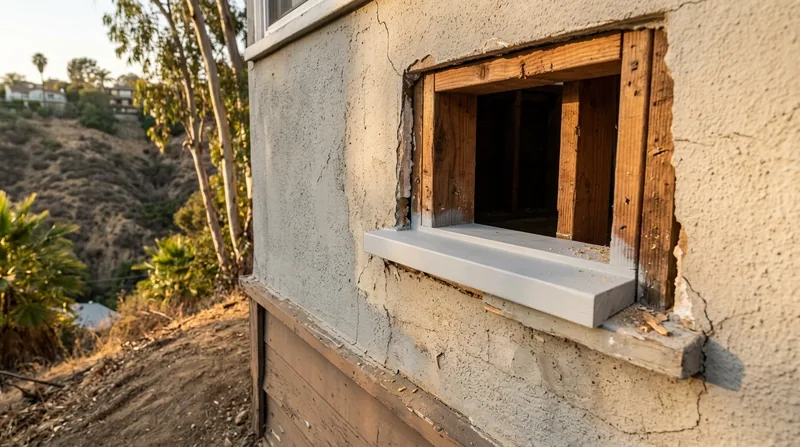




Los Angeles's dry Mediterranean climate creates a deceptive wood rot environment. While coastal fog drives rot up the coast, here in Los Angeles cracked stucco and compromised flashing let moisture trap behind wood framing for years, unseen. The result is wood rot and dry rot repair that demands precision: we cut out decayed framing, siding and trim, treat surrounding wood, and rebuild with rot-resistant lumber. This is a permanent repair, not a cosmetic patch. The same carpenters handle every job from diagnosis through completion, and we explain what we find rather than dramatize it. If you need wood rot repair near Los Angeles, call (213) 652-2684 or visit our contact page for a free estimate.
Why Wood Rot and Dry Rot Matter in Los Angeles Homes
Los Angeles residential stock spans Spanish Colonial Revival mansions in Hancock Park, Victorian craftsman in West Adams, bungalows across Los Feliz and Highland Park, mid-century moderns in the hillside neighborhoods above Silver Lake, and stucco-over-wood-frame subdivisions across the San Fernando Valley. Nearly all of this wood framing sits behind exterior cladding, and that cladding fails. Cracked stucco, failed caulk, missing or damaged siding, and compromised flashing create pathways for water to reach the wood. Once moisture gets behind the wall, it stays there. The dry air outside doesn't dry it out; the wood stays damp, and decay begins.
- Cracked stucco and failed exterior sealants trap moisture against wood framing for months or years before visible damage appears.
- Decayed rim joists and sill plates compromise the structural connection between foundation and wall, creating movement and settlement.
- Rotted studs and header framing weaken load-bearing walls and can cause sagging ceilings or floors in upper stories.
- Soft wood in window and door jambs allows frames to shift, creating gaps that let in more water and insects.
- Deteriorated fascia, soffit, and exterior trim accelerate water entry into walls and attic spaces.
Early detection and repair prevent the decay from spreading deeper into the structure and avoid the much higher cost of replacing entire wall sections or floor systems.
Key info: Los Angeles's warm, dry climate keeps the drywood termite season active nearly year-round. Termites often follow rot, so if you see soft or discolored wood, have a pest inspection done by a licensed pest control operator. We repair the wood damage once you have that report. See our termite damage repair page for more detail on that relationship.
For official guidance on permits and inspections in Los Angeles, homeowners can check the Los Angeles Department of Building and Safety website for structural repair requirements and local code thresholds.
How We Repair Wood Rot and Dry Rot in Los Angeles
Our process starts with a detailed inspection to locate all decayed wood, identify the moisture source, and assess how far the damage has spread. We remove all soft and discolored framing, siding, and trim, exposing the sound wood underneath. We then treat the surrounding area with a wood preservative to arrest any incipient decay, and rebuild with pressure-treated or naturally rot-resistant lumber. The repair is structural and permanent; it doesn't mask the problem or rely on coatings that will fail in a few years.
- We inspect the full extent of decay by probing suspect areas and opening walls or cladding to see the actual condition of the framing.
- We identify and document the moisture source, whether it is cracked stucco, failed flashing, a leaking gutter, or condensation from poor ventilation.
- We remove all decayed wood, cutting back to sound material, and dispose of it properly off-site.
- We treat exposed sound wood with a wood preservative to protect it from future decay.
- We rebuild the damaged section using pressure-treated lumber or naturally rot-resistant species like redwood or Douglas fir, sized and fastened to match the original framing.
- We seal the repair and the moisture source, whether that means new siding, flashing, caulk, or gutter repair, to prevent recurrence.
This methodical approach costs more upfront than a surface patch, but it eliminates the repair from your list of worries and adds years of durability to your home.
Example: A 1950s Craftsman bungalow in Los Feliz had cracked stucco around a corner window. Water had been running down the inside of the wall for three years, rotting the window header, two studs, and part of the rim joist. We removed the damaged framing, treated the surrounding wood, rebuilt the header and studs with pressure-treated Douglas fir, installed new flashing, and reroofed the stucco. The repair took five days and cost $2,800. A full wall replacement would have cost four times that.
Wood Rot and Dry Rot Repair Methods and When to Use Them
| Approach | Description | Best for |
|---|---|---|
| Spot repair and replacement | Remove the decayed section only, treat the surrounding sound wood, rebuild with new lumber matching the original size and species. | Small areas of rot in trim, siding, or non-structural framing; window and door jambs; localized soft spots in rim joists or floor joists. |
| Sistering and reinforcement | Bolt a new pressure-treated or rot-resistant member alongside the damaged joist, stud, or beam to restore load-bearing capacity without full removal and replacement. | Partial decay in floor joists, rim joists, or structural studs where the core of the member is still sound and can be reinforced. |
| Full member replacement | Remove the entire decayed joist, stud, header, or beam and install a new one sized to carry the same load and fastened to code. | Extensive decay affecting more than 30 percent of a structural member's cross-section; damage to load-bearing headers, beams, or sill plates. |
| Moisture source correction | Repair or replace the flashing, siding, caulk, gutters, or ventilation that allowed water to reach the wood in the first place. | All repairs, to prevent recurrence; often the most cost-effective long-term investment because it stops the decay cycle. |
The choice among these methods depends on the extent of decay, the structural importance of the member, and the cost-to-benefit ratio of repair versus replacement. We assess this on site and propose the most honest solution.
Wood Rot and Dry Rot Repair Cost in Los Angeles: What to Expect
Repair costs for wood rot and dry rot in Los Angeles start at around $650 for small, localized repairs such as a rotted window jamb or a few linear feet of damaged trim or siding. Larger jobs involving multiple studs, rim joists, or floor joists typically run $1,500 to $4,000, depending on the depth of decay, the lumber species required, and whether the moisture source can be corrected easily. Full beam or header replacement, or extensive floor joist sistering, can exceed $6,000. The main variables are the size of the decayed area, the accessibility of the framing, the structural importance of the member, and whether correcting the moisture source requires additional work like new flashing or siding repair.
Getting two or three estimates from different carpenters is smart. Each will assess decay differently and may propose different repair strategies. Compare not just the price but the scope of work, the lumber type, and the warranty or guarantee offered. Our estimates are free and carry no obligation. Call (213) 652-2684 or visit our pricing page for more detail on how we structure estimates.
If the rot is tied to a termite infestation, your pest control operator's report will guide the scope of wood repair needed. We work from that report and repair only the wood that has been damaged. We do not perform termite treatment or pest control; that is a separate licensed trade.
What to Look for When Hiring a Carpentry Contractor Near Los Angeles
Finding the right carpenter for wood rot repair means checking a few key things. First, confirm the contractor is fully insured and carries both general liability and workers' compensation coverage. Ask for a certificate of insurance. Second, ask whether the contractor will pull a permit if one is required. Structural repairs, including load-bearing wall alterations and extensive joist replacement, often require a permit from the Los Angeles Department of Building and Safety. A contractor who skips permitting may leave you liable if the work fails or causes damage. Third, ask for references and call at least two past clients to ask about the quality of the repair and whether it has held up. Fourth, get the estimate in writing, including the lumber type, the method of repair, and any work to address the moisture source.
- Verify that the contractor carries full insurance and can provide a current certificate of insurance at the start of the job.
- Ask whether the scope of work requires a permit and, if so, confirm the contractor will obtain one before beginning.
- Request references from past wood rot or structural repair jobs and follow up with at least two.
- Obtain a written estimate that names the lumber type, the repair method, the timeline, and any warranty or guarantee.
- If your home is in an HOA community or a historic district, check whether there are design or approval requirements before work begins.
The cheapest estimate is often the one that cuts corners on lumber quality or skips the moisture correction. The most expensive is not always the best. The right contractor explains the pathology, proposes a durable repair, and stands behind the work. Contact us at los-angeles-carpentry.com/contact to discuss your situation and get a free, no-obligation estimate.
Wood Rot & Dry Rot Repair in Los Angeles: Pricing Guide
| Service | Price | Details |
|---|---|---|
| Small localized rot repair | Starting at $650 | Window jambs, trim sections, small siding patches, and minor stud or joist decay in accessible areas |
| Medium repair with moisture correction | Starting at $1,500 | Multiple studs or rim joist sections, new flashing or siding to stop water entry, treatment of surrounding wood |
| Structural joist or beam work | Starting at $3,500 | Floor joist sistering or replacement, rim joist repair, header replacement, or extensive decay requiring load assessment |
| Complex or large-scale structural repair | On estimate | Multiple members, deep decay, difficult access, or repairs requiring temporary shoring or engineered solutions need site assessment |
| Travel and mobilization | Included | No separate mileage fee or travel charge within Los Angeles and surrounding service areas |
| Free estimate | No obligation | Response within 24 hours at (213) 652-2684, written scope and pricing before any work begins |
Indicative pricing, the exact cost depends on square footage, finish, and site access. Free personalized estimate within 24h at (213) 652-2684.


