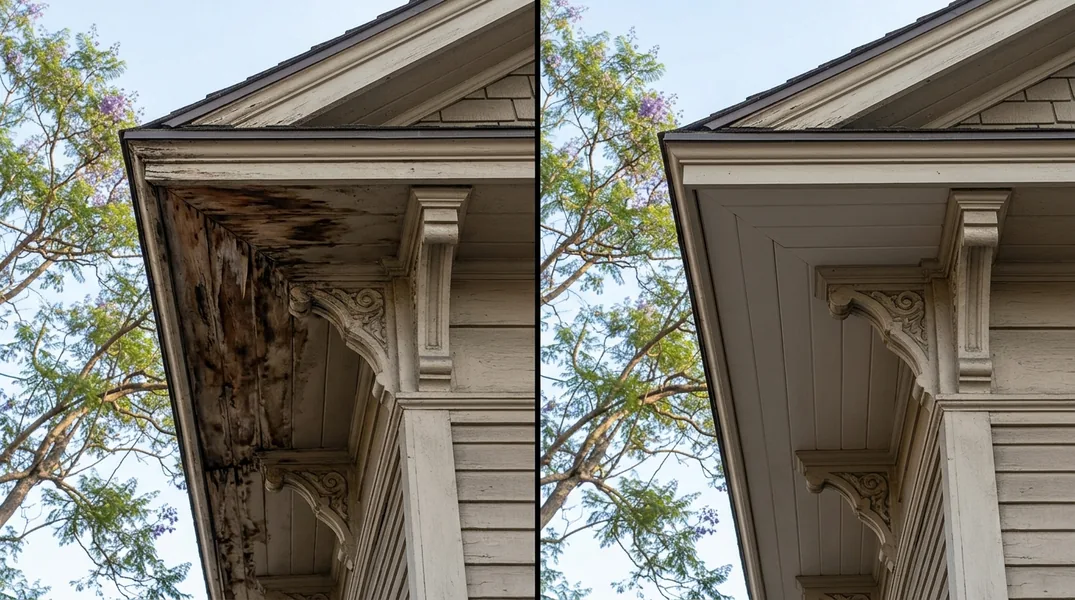
Why Spanish Revival and Craftsman Homes Need Special Wood Care
Spanish Revival and Craftsman bungalows are among the most beloved architectural styles in Los Angeles. Built primarily between 1900 and 1930, these homes feature extensive use of wood in their structural frames, exterior siding, interior trim, and decorative details. What makes them beautiful also makes them vulnerable: the original wood materials, while often high-quality by today's standards, have now been exposed to a century or more of Los Angeles's variable climate, moisture infiltration, and pest pressure.
Unlike modern homes with pressure-treated lumber and synthetic materials, historic Spanish Revival and Craftsman properties rely on untreated or minimally treated wood throughout. This means wood rot and dry rot aren't just cosmetic problems waiting to happen, they're almost inevitable without proactive maintenance. The good news is that understanding your home's vulnerabilities and addressing them early can preserve the character and structural integrity of your property for generations to come. Many homeowners in neighborhoods like Los Feliz, Eagle Rock, and Silver Lake have successfully maintained their historic homes by staying vigilant about wood condition and investing in timely repairs.
Understanding Wood Rot vs. Dry Rot: What's Actually Happening to Your Home
The terms 'wood rot' and 'dry rot' are often used interchangeably, but they're actually different problems that require different solutions. Wet rot (what most people call wood rot) occurs when wood is exposed to sustained moisture, typically above 20% moisture content. This allows wood-decay fungi to colonize the wood fibers, breaking down the cellulose and leaving the wood soft, spongy, and weakened. In Los Angeles, wet rot commonly develops in areas with poor drainage, leaky gutters, damaged roof flashings, or plumbing leaks that go undetected for months.
Dry rot, despite its name, also requires moisture to develop, but it's caused by a specific fungus (Serpula lacrymans) that can spread through wood and even across masonry to reach new wood sources. Dry rot is particularly insidious because it can travel through your home's structure, making it harder to spot and contain. Both types of decay weaken the wood's load-bearing capacity, which is especially concerning in historic homes where structural wood members are doing heavy lifting. Wood Rot & Dry Rot Repair should be handled by professionals who understand how to identify the extent of damage and restore structural integrity without compromising historical authenticity.
Common Problem Areas in Spanish Revival and Craftsman Homes
Spanish Revival homes typically feature exposed wood beams, wooden window frames, and ornamental siding that create multiple points of vulnerability. The flat roofs common in Spanish Revival design are particularly prone to water pooling and membrane degradation, which eventually leads to interior wood damage. Craftsman bungalows, with their prominent front porches, exposed rafter tails, and detailed trim work, face similar challenges. The porch structure is often the first place where wood rot appears because it's exposed to weather on multiple sides and moisture can become trapped in the joints and connections.
Another common problem area is wood siding repair, particularly in homes with original wood shingles or horizontal siding. When paint fails or caulking deteriorates, water penetrates the wood surface and begins the decay process. Interior structural elements like Floor Joist & Subfloor Repair areas can be affected by chronic moisture problems that develop silently beneath visible surfaces. Foundation perimeter wood, window sills, door frames, and areas around plumbing penetrations are all high-risk zones. Regular inspections of these vulnerable spots can catch problems before they become expensive.
Prevention Strategies That Actually Work for Historic Homes
The best approach to wood maintenance in a Spanish Revival or Craftsman home is prevention. Start with your roof and gutters, which are your home's first line of defense against water intrusion. Make sure gutters are clean, properly pitched, and equipped with downspouts that direct water at least four feet away from the foundation. Inspect roof flashings around chimneys, vents, and where different roof sections meet. These are common leak points that can go unnoticed until significant interior damage has occurred. If your home has a flat roof, ensure that the membrane is in good condition and that water isn't pooling anywhere on the surface.
Next, focus on exterior wood surfaces. Keep paint and stain in good condition by repainting or restaining every 5 to 7 years, depending on exposure and climate. Check caulking around windows, doors, and trim details at least annually and recaulk as needed. Ensure that wood-to-soil contact is minimal by maintaining proper grading around the foundation and keeping mulch at least 6 inches away from wood siding. Install or maintain proper ventilation in crawl spaces and attics to reduce humidity. Consider installing a dehumidifier in chronically damp basements or crawl spaces. These preventive measures cost far less than dealing with extensive rot damage later.
When to Call a Professional for Wood Rot Repair Near Me
Some wood maintenance tasks are appropriate for homeowners, but wood rot and dry rot repair require professional expertise. If you notice soft spots in wood, discoloration, peeling paint, or a musty smell in any area of your home, it's time to call in a specialist. Professionals can use moisture meters and visual inspection to determine whether decay is present and how far it has progressed into the wood. They can also identify the moisture source, which is essential because removing rotten wood without fixing the underlying water problem will just result in new rot developing in the same location.
Los Angeles Carpentry specializes in Wood Rot & Dry Rot Repair for historic homes throughout the region. Our team understands the specific challenges that Spanish Revival and Craftsman properties face and knows how to repair damage while maintaining historical integrity. Whether the issue is isolated surface rot or more extensive structural damage, we can provide a detailed assessment and recommend the most appropriate repair approach. Some repairs may involve removing and replacing damaged wood sections, while others might require epoxy consolidation or other specialized techniques. If you're concerned about wood condition in your historic home, contact us for a free estimate or call (213) 652-2684 to discuss your specific situation.
Wood Rot & Dry Rot Repair Cost in Los Angeles: What to Budget
The cost of wood rot repair varies dramatically depending on the extent of damage, the location of the affected wood, and the complexity of the repair. A small area of surface rot on a window frame might cost $300 to $800 to repair, while extensive rot in structural beams or floor joists could run into thousands of dollars. Dry rot, because of its ability to spread through the structure, often requires more extensive and expensive remediation than localized wet rot. The good news is that catching problems early significantly reduces repair costs. A small area of rot discovered and repaired today might cost $500, but if left to spread for two more years, that same problem could cost $5,000 or more.
When budgeting for wood rot repair, remember that professional assessment is the first step and is often more affordable than you might expect. Understanding the true scope of damage before committing to repairs helps you make informed decisions about your home's maintenance. For detailed information about pricing and what you can expect to invest in your specific repair needs, Los Angeles Carpentry is happy to provide a comprehensive quote. We'll walk you through the options, explain what's necessary versus what's optional, and help you prioritize repairs based on structural urgency and budget. Call (213) 652-2684 or visit our website to request a free estimate for your wood rot concerns.
Looking for a professional carpentry contractor in Los Angeles? Los Angeles Carpentry responds fast for all your carpentry needs.
Get a Free QuoteOur services: Wood Rot & Dry Rot Repair · Termite Damage Repair · Floor Joist & Subfloor Repair